
Slabs That Support What You Build on Them
Structural concrete slabs for sheds, garages, and additions in Orlando
When you plan to add a shed, garage, or room to your Orlando property, the structure needs a level, solid foundation that will not shift or crack under the weight of framing, roofing, and stored equipment. You might be preparing to install a prefab building, frame a workshop, or pour footings for a garage, and in all of those cases, the slab has to be poured to the right thickness and reinforced correctly for the intended load. Warner Construction Group Inc. builds structural concrete slabs designed to meet the practical and structural requirements of sheds, workshops, garages, HVAC pads, and home additions.
This service includes base preparation, moisture barrier installation, accurate thickness calculation based on the intended use, and reinforcement with rebar or wire mesh to prevent cracking. The slab is poured level and finished smooth so it is ready for framing or prefab installation. The base is prepared with compacted fill and gravel to prevent settling over time, which is critical in Orlando where sandy soil and water movement can undermine shallow slabs. The slab is built to support the weight of walls, roofing, stored items, and equipment without sagging or developing cracks that compromise the structure above it.
If you need a foundation slab for a garage, shed, or addition at your Orlando property, contact Warner Construction Group Inc. to schedule a consultation.
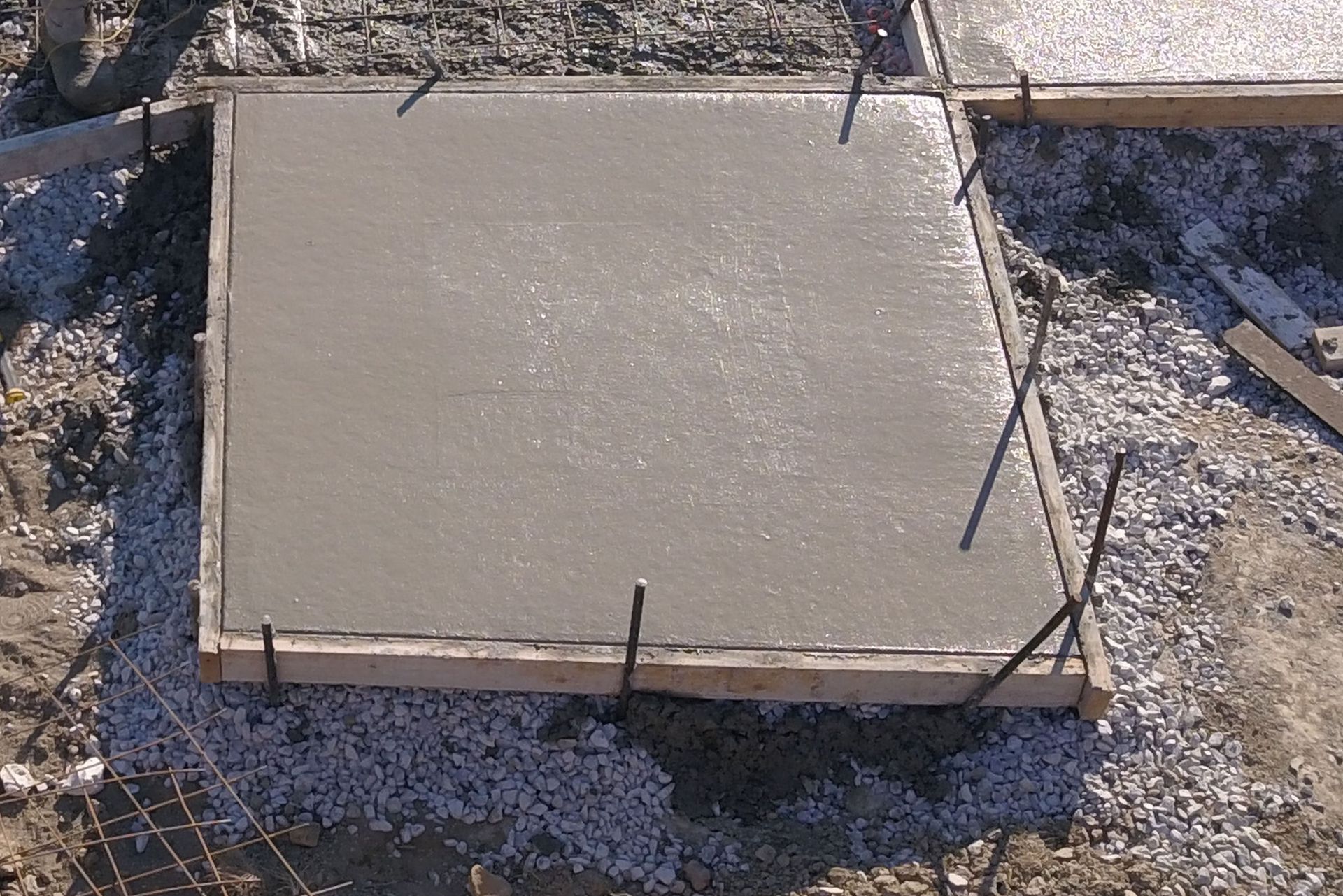
How a Foundation Slab Gets Poured Correctly
When you arrange for slab installation in Orlando, the process begins with excavating the area and verifying that the ground is stable and level. A base layer of compacted gravel is installed to improve drainage and reduce the risk of settling. A moisture barrier is placed over the base to prevent water from wicking up into the concrete, which can weaken the slab over time. Forms are set to define the perimeter, and rebar or wire mesh is positioned inside the forms to reinforce the concrete and prevent cracking under load. The concrete is poured, leveled, and finished with a smooth trowel so the surface is ready for framing or installation of a prefab structure.
After the concrete cures, you will have a flat, solid surface that does not move or sag when you begin building on top of it. The slab will support the weight of walls, roofing, stored tools, and vehicles without developing cracks or dips. You will also notice that water does not collect on the surface because the slab is level and the ground beneath it is properly drained. The slab provides a stable, long-term foundation that allows you to move forward with framing, construction, or placement of prefab buildings.
The service includes excavation, base preparation, moisture barrier installation, forming, reinforcement, pouring, and finishing. It does not include framing, electrical work, or plumbing unless specified as part of a larger project. If the slab is being used for a garage or addition that requires footings or tie-ins to existing structures, that work is planned and completed before the slab is poured.
It is normal to have questions about foundation work
Homeowners in Orlando often ask about slab thickness, curing time, and what to prepare before the crew arrives. These questions help clarify what happens during installation and what to expect after the concrete is poured.
- How thick does a slab need to be for a garage or shed? Most garage and shed slabs in Orlando are poured at four to six inches thick with rebar reinforcement. The exact thickness depends on the size of the structure and whether vehicles or heavy equipment will be stored inside.
- What is a moisture barrier and why does it matter? A moisture barrier is a plastic sheet placed under the slab to prevent water from wicking up into the concrete. It helps reduce cracking, keeps the slab dry, and improves durability in areas with high groundwater or frequent rain.
- How long does a slab take to cure before building on it? You can begin framing or placing a prefab building on the slab after seven days in most cases. Full curing takes about twenty-eight days, but the slab reaches sufficient strength for construction much sooner.
- Why do some slabs crack even when they are new? Slabs crack when the base is not compacted properly, when reinforcement is skipped, or when the concrete is poured too thin for the load it will carry. Proper preparation and accurate thickness prevent most cracking issues.
- Can a slab be poured for an HVAC unit or storage building? Yes, Warner Construction Group Inc. pours slabs for HVAC pads, storage buildings, and other small structures. The slab is sized and reinforced based on the weight and footprint of the unit or building.
If you are adding a garage, shed, or room to your Orlando property and need a foundation slab that will support the structure for years, Warner Construction Group Inc. provides accurate, reinforced slabs built to meet structural and practical performance requirements. Reach out to discuss your project and schedule installation.